

1. Module Title: Introduction to Hospitality and Tourism industry
2. Brief description of aims and content
The module aims at impacting knowledge to the learner on the core concepts of hospitality and tourism industry that will help the students understand the link between the two.
Learning Outcomes
Knowledge and Understanding
Having successfully completed the module, students should be able to demonstrate knowledge and understanding of:
i The history and development of the hospitality and Tourism and its linkage.
ii Quality parameters used in rating the service standard quality in hospitality and tourism.
iii The current issues and future trends in hospitality and tourism
Cognitive/Intellectual skills/Application of Knowledge
Having successfully completed the module, students should be able to:
i. Classify different types of hospitality outlet
ii. Apply the knowledge gained in explaining the relationship between hospitality and tourism industry
iii. Contrast between hospitality and tourism industry
Communication/ICT/Numeracy/Analytic Techniques/Practical Skills
Having successfully completed the module, students should be able to:
- Demonstrate skills in classifying different sectors of tourism and hospitality.
- Evaluate the roles played by the hospitality and tourism industry
General transferable skills
Having successfully completed the module, students should be able to:
- Use knowledge gained to analyze the impact of tourism in economic, social, technological and cultural development
- Teacher: Ernest SAFARI

Course Information
- Course Name: English for Tourism and Hospitality
- Course Code: BLTH 1101
- Programme: Tourism and Hospitality / Related Programmes
- Academic Year: 2025–2026
- Course Lecturer: Nelson
- Credits: 10
- Level/Semester: (Year I & Sem I)
- Delivery Mode: Face-to-face lectures, practical sessions, and online support (Moodle)
Course Overview
English for Tourism and Hospitality is a practical communication course designed to equip learners with essential English language skills used in the tourism and hospitality industry. The course focuses on speaking, listening, reading, and writing skills required in real-life situations such as hotels, restaurants, travel agencies, airports, and customer service environments. Emphasis is placed on professional vocabulary, polite expressions, and effective communication with international clients.
Learning Objectives
- Develop effective communication skills in English for hospitality settings
- Use appropriate vocabulary for tourism and hotel operations
- Improve speaking and listening skills in customer service situations
- Enhance writing skills for professional hospitality communication
- Promote confidence in interacting with international guests
Learning Outcomes
By the end of the course, students will be able to:
- Communicate effectively with guests and clients in English
- Handle hotel and tourism-related conversations professionally
- Write basic hospitality documents such as emails, inquiries, and reports
- Use polite and professional expressions in customer service
- Demonstrate improved listening and speaking fluency in real-life situations
Prerequisites
- Basic English communication skills
- Interest in tourism and hospitality industry
Learning Resources
- Lecture notes and handouts
- Hospitality English textbooks
- Audio and video materials
- Online learning resources and tourism websites
- Role-play and dialogue scripts
Learning Activities
- Role plays (hotel reception, restaurant service, airport communication)
- Group discussions
- Listening exercises
- Vocabulary building activities
- Writing practice (emails, booking forms, complaints)
- Simulated customer service situations
Assessment Methods
- Assignments
- Quizzes
- Continuous Assessment Tests (CATs)
- Oral presentations
- Midterm Examination
- Final Examination
Course Duration
- 15 Weeks
Lecturer Information
Name:NELSON
Email:
Course Information
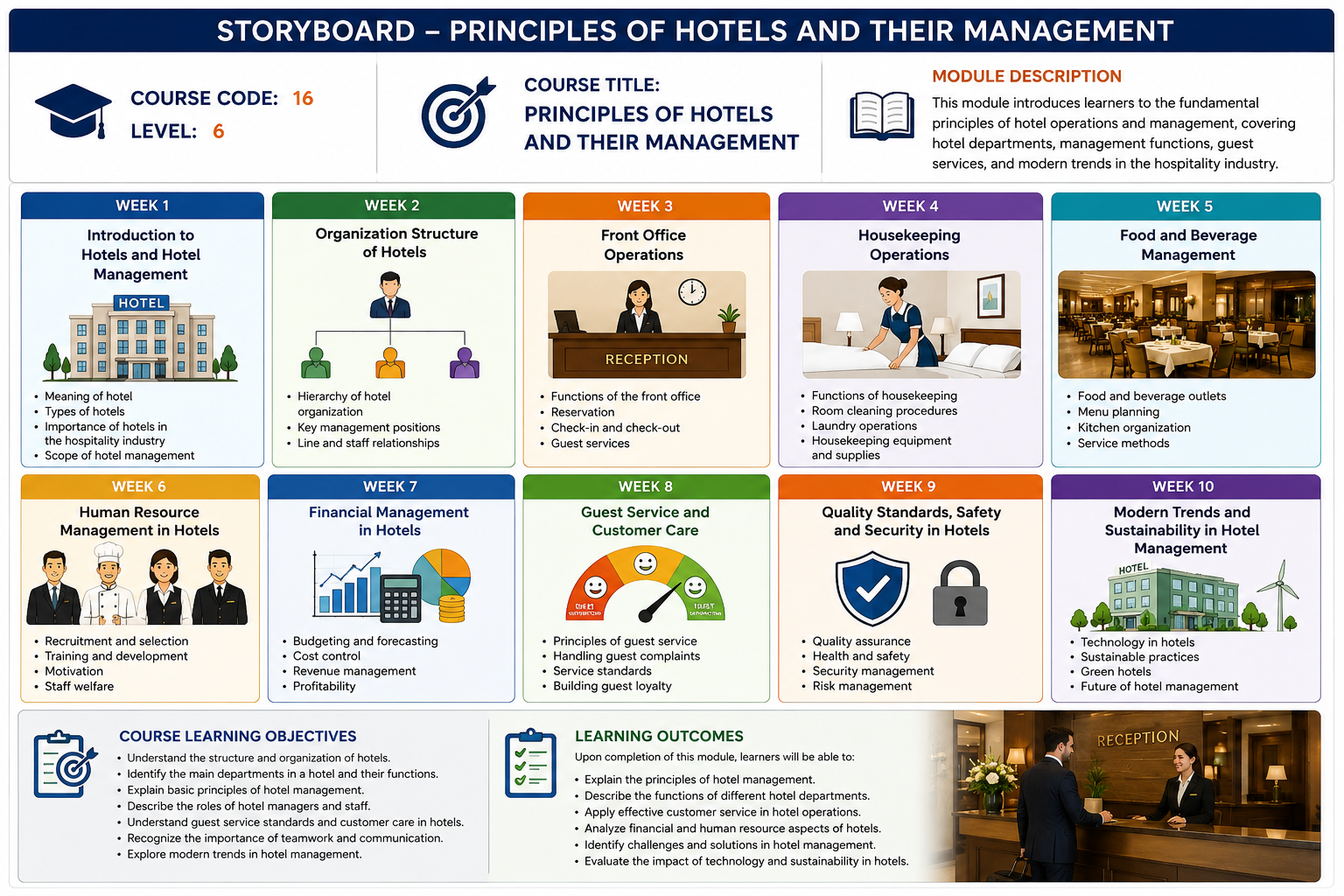
- Course Name: Principles of Hotels and their Management
- Course Code: BLTH1102
- Programme: Bachelor of Hospitality / Tourism and Hotel Management
- Academic Year: 2025–2026
- Course Lecturer: Jean Claude
- Credits:15
- Level/Semester: ( Year I & Semester I)
- Delivery Mode: Face-to-face lectures, practical sessions, and Moodle support
Course Overview
This course introduces learners to the fundamental principles and practices involved in hotel operations and management. It provides an understanding of how hotels are organized, how different departments function, and how services are coordinated to deliver quality guest experiences. Key areas include front office operations, housekeeping, food and beverage services, human resource management, customer service, and hotel administration. The course also emphasizes professionalism, efficiency, and quality standards in hospitality management.
Learning Objectives
- Understand the structure and organization of hotels
- Identify key hotel departments and their functions
- Apply basic principles of hotel management
- Develop customer service and operational skills
- Understand quality standards in hotel operations
Learning Outcomes
By the end of the course, learners will be able to:
- Describe the organizational structure of hotels
- Explain the roles of different hotel departments
- Demonstrate knowledge of front office and housekeeping operations
- Apply customer service principles in hotel environments
- Analyze basic challenges in hotel management and suggest solutions
Prerequisites
- Basic English communication skills
- Introduction to Hospitality and Tourism
Learning Resources
- Lecture notes and handouts
- Hotel management textbooks
- Hospitality industry case studies
- Videos on hotel operations and management
- Online hospitality journals and articles
Learning Activities
- Interactive lectures
- Case studies and group discussions
- Role plays (front office and guest handling scenarios)
- Field visits to hotels
- Practical demonstrations
- Assignments and presentations
Assessment Methods
- Assignments
- Quizzes
- Continuous Assessment Tests (CATs)
- Midterm Examination
- Final Examination
Course Duration
- 15 Weeks
Lecturer Information
Name: Jean Claude
Email:
Course Information
- Course Name: Introduction to Hospitality and Tourism Industry
- Course Code: BLTH1101
- Programme: Hospitality and Tourism / Related Programmes
- Academic Year: 2025–2026
- Course Lecturer: Dr. Wanyera
- Credits: 10
- Level/Semester: ( Year I & Semester I)
- Delivery Mode: Face-to-face lectures, practical sessions, and Moodle support
Course Overview
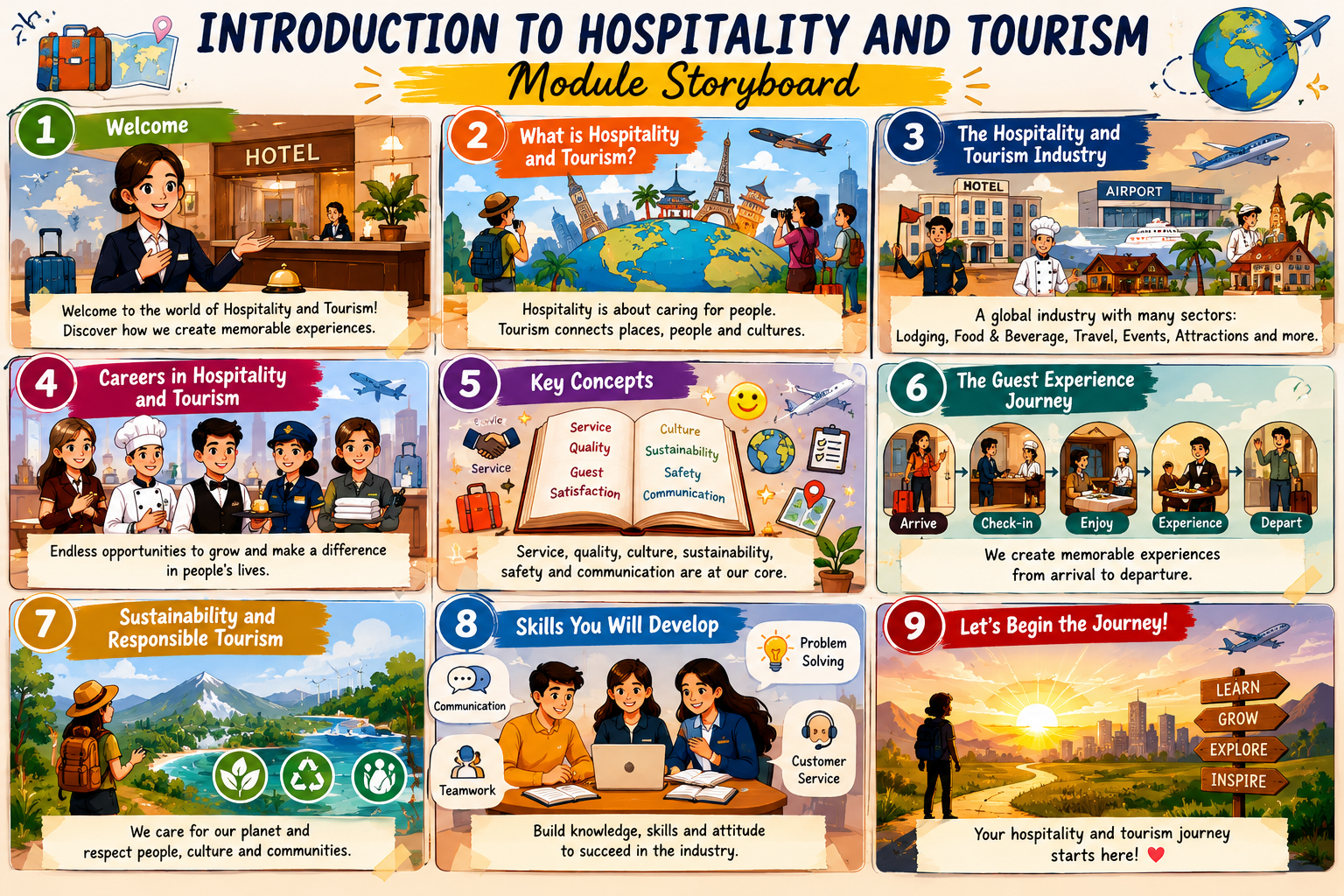
This course introduces learners to the hospitality and tourism industry, its structure, components, and importance in local and global economies. It explores major sectors such as accommodation, food and beverage services, travel, tourism operations, and customer service. The course also highlights career opportunities, industry trends, professionalism, and the role of hospitality and tourism in economic development.
Learning Objectives
- Introduce the structure of the hospitality and tourism industry
- Understand the key sectors of hospitality and tourism
- Explain the importance of tourism in economic development
- Develop awareness of hospitality careers and professionalism
- Identify current trends in the tourism industry
Learning Outcomes
By the end of the course, learners will be able to:
- Describe the components of the hospitality and tourism industry
- Explain the relationship between tourism and hospitality services
- Identify different career opportunities in the industry
- Demonstrate understanding of customer service principles
- Analyze basic trends affecting tourism and hospitality
Prerequisites
- Basic English communication skills
- General knowledge or interest in tourism and hospitality
Learning Resources
- Lecture notes and handouts
- Tourism and hospitality textbooks
- Industry reports and case studies
- Videos on tourism operations
- Online articles and journals
Learning Activities
- Interactive lectures
- Group discussions
- Case study analysis
- Field visits (hotels, travel agencies, tourism sites)
- Presentations
- Assignments and quizzes
Assessment Methods
- Assignments
- Quizzes
- Continuous Assessment Tests (CATs)
- Midterm Examination
- Group projects
- Final Examination
Course Duration
- 15 Weeks
Lecturer Information
Name:Dr.Wanyera
Email:
Course Information
- Course Name: Computer Literacy
- Course Code: IT 111
- Programme: All Academic Programmes
- Academic Year: 2025–2026
- Course Lecturer: Mumararungu Yves
- Credits:10
- Level/Semester: ( Year I & Semester I)
- Delivery Mode: Face-to-face practical sessions with lab-based training and Moodle support
Course Overview
Computer Literacy is a foundational course designed to equip learners with essential knowledge and practical skills in using computers and digital technologies. The course introduces basic computer concepts, operating systems, word processing, spreadsheets, presentations, internet use, and digital communication. It prepares students to effectively use ICT tools in academic, professional, and everyday life.
Learning Objectives
- Understand basic computer concepts and terminology
- Develop practical skills in using computer applications
- Use Microsoft Office tools effectively (Word, Excel, PowerPoint)
- Improve internet and email communication skills
- Promote safe and responsible use of ICT
Learning Outcomes
By the end of the course, learners will be able to:
- Identify computer hardware and software components
- Use a computer operating system confidently
- Create and format documents using word processing software
- Develop spreadsheets and perform basic calculations
- Design presentations using presentation software
- Use the internet and email for communication and research
Prerequisites
- No prior computer knowledge required
Learning Resources
- Computer lab equipment
- Lecture notes and handouts
- Microsoft Office applications
- Online tutorials and videos
- ICT manuals and guides
Learning Activities
- Practical computer lab exercises
- Interactive demonstrations
- Assignments and projects
- Group activities
- Online research tasks
Assessment Methods
- Assignments
- Practical exercises
- Quizzes
- Continuous Assessment Tests (CATs)
- Midterm Examination
- Final Practical Examination
Course Duration
- 15 Weeks
Lecturer Information
Name:Mumararungu Yves
Email: mumararunguyves@gmail.com

Course Information
- Course Name: Food and Beverage Service Operations
- Course Code: BLTH1103
- Programme: Hospitality and Tourism / Hotel Management
- Academic Year: 2025–2026
- Course Lecturer: MUKASE
- Credits:10
- Level/Semester: ( Year I & Semester I)
- Delivery Mode: Face-to-face practical sessions, demonstrations, and Moodle support
Course Overview
Food and Beverage Service Operations introduces learners to the principles and practices of professional food and beverage service in hospitality establishments such as hotels, restaurants, bars, and catering services. The course focuses on service techniques, restaurant organization, customer care, table setup, order taking, service standards, and hygiene practices. It equips learners with practical skills needed to deliver high-quality guest service in the food and beverage industry.
Learning Objectives
- Understand the structure of food and beverage service operations
- Develop professional service skills in restaurants and hotels
- Apply correct table setup and service techniques
- Improve customer care and communication skills
- Maintain hygiene and safety standards in service areas
Learning Outcomes
By the end of the course, learners will be able to:
- Describe different types of food and beverage service
- Perform table setting and service procedures correctly
- Take and process customer orders professionally
- Demonstrate good customer service and communication skills
- Apply hygiene and safety standards in food service operations
Prerequisites
- Basic English communication skills
- Introduction to Hospitality and Tourism
Learning Resources
- Lecture notes and handouts
- Hospitality service textbooks
- Training videos on food and beverage service
- Restaurant manuals and SOPs
- Practical demonstration materials
Learning Activities
- Practical restaurant simulations
- Role plays (waiter–customer interaction)
- Table setup exercises
- Group discussions
- Field visits to restaurants/hotels
- Assignments and quizzes
Assessment Methods
- Assignments
- Practical service exercises
- Quizzes
- Continuous Assessment Tests (CATs)
- Midterm Examination
- Final Practical Examination
Course Duration
- 15 Weeks
Lecturer Information
Name: MUKASE
Email:
- Teacher: Immaculate MUKASE