
DIGITAL STUDIO RECORDING & SOUND DESIGN
Course Information
Course Name: Digital Studio Recording & Sound Design
Course Code: BFS 3102
Programme: Bachelor of Arts in Film Studies with Honours
Academic Year: 2025–2026
Course Lecturer: Yannick MURANGIRA
Credits: 15
Level/Semester: Year III, Trimestre 1
Delivery Mode: Face-to-face lectures with practical studio recording sessions, sound design workshops, audio production projects, hands-on exercises, and Moodle support.
Welcome Message
Welcome to Digital Studio Recording & Sound Design.
This course introduces students to the creative and technical processes involved in professional audio recording and sound design for film, television, music, and multimedia productions. Sound plays a vital role in storytelling by creating emotions, enhancing realism, and improving the overall quality of visual productions.
Throughout this course, students will explore digital recording techniques, studio operations, audio editing, mixing, and sound design practices. Through practical studio sessions and production projects, learners will develop the skills required to create high-quality sound content using professional audio equipment and digital audio technologies.
Course Overview
The Digital Studio Recording & Sound Design course provides students with advanced knowledge and practical experience in digital audio production, studio recording, and sound design for film and multimedia projects. The course explores the principles of sound recording, acoustics, audio signal flow, microphone techniques, digital audio processing, and professional studio workflows.
Students will learn how to plan and execute recording sessions, operate studio equipment, capture dialogue, music, and sound effects, and apply creative sound design techniques to enhance storytelling. The course also covers digital audio editing, mixing, equalization, compression, noise reduction, effects processing, Foley production, and audio mastering.
Practical activities emphasize the use of Digital Audio Workstations (DAWs) and professional sound production tools to create audio content for films, documentaries, advertisements, podcasts, and other digital media platforms.
Through individual and collaborative projects, students will experience the complete sound production process from recording and editing to final mixing and delivery. By the end of the course, learners will be able to produce professional-quality audio suitable for modern film and multimedia industries.
Learning Objectives
The course aims to:
- Introduce students to the principles of digital studio recording and sound design.
- Develop practical skills in professional audio recording techniques.
- Understand studio equipment, acoustics, and audio signal flow.
- Apply microphone selection and placement techniques.
- Develop skills in digital audio editing and mixing.
- Explore creative sound design techniques for film and multimedia.
- Understand the role of sound in visual storytelling.
- Use Digital Audio Workstations (DAWs) for audio production.
- Apply audio processing techniques to improve sound quality.
- Develop professional skills in managing audio production projects.
Learning Outcomes
Upon successful completion of this course, students will be able to:
- Explain the fundamental concepts of digital audio recording and sound design.
- Operate professional studio recording equipment effectively.
- Set up recording environments and manage audio signal flow.
- Select appropriate microphones for different recording applications.
- Record dialogue, music, ambience, and sound effects professionally.
- Edit and process digital audio using industry-standard software.
- Apply sound design techniques to support visual storytelling.
- Perform audio mixing and mastering for multimedia productions.
- Create Foley and environmental sound effects.
- Evaluate the technical and artistic quality of audio productions.
Learning Resources
- Lecturer’s notes and presentations
- Digital audio recording textbooks
- Sound design and film audio production references
- Digital Audio Workstation (DAW) tutorials
- Professional microphone and recording equipment manuals
- Audio mixing and mastering guides
- Film sound production case studies
- Online audio engineering resources
- Studio practical materials
- Moodle learning materials
Learning Activities
- Interactive lectures
- Studio recording demonstrations
- Microphone placement exercises
- Audio editing practical sessions
- Sound effects creation workshops
- Foley recording exercises
- Dialogue recording and processing
- Audio mixing and mastering practices
- Film sound analysis sessions
- Group sound production projects
- Peer review and audio evaluation sessions
- Moodle-based learning activities
Assessment Methods
- Assignment: 10 Marks
- Continuous Assessment Test (CAT): 10 Marks
- Mid-Term Examination: 40 Marks
- Final Examination: 40 Marks
Course Duration
15 Weeks
- Teacher: Yannick MURANGIRA

Course Information
Course Name: Music Video Production
Course Code: BFS3104
Programme: Bachelor of Arts in Film Studies with Honours
Academic Year: 2025–2026
Course Lecturer: RUTABINGWA Jacques
Credits: 15
Level/Semester: Year III, Trimestre 1
Delivery Mode: Face-to-face lectures with practical production sessions, studio and field exercises, project-based learning, and Moodle support
Welcome Message
Welcome to Music Video Production.
This course introduces students to the creative, technical, and production processes involved in creating professional music videos. Music videos combine visual storytelling, performance, cinematography, editing, sound, and artistic direction to communicate the identity and emotions of a musical work.
Throughout this course, students will explore the complete music video production process, from concept development and pre-production planning to filming, editing, post-production, and final delivery. Through practical projects, learners will develop the skills required to create visually engaging and professionally produced music content for television, online platforms, and digital media distribution.
Course Overview
The Music Video Production course provides students with advanced knowledge and practical experience in the planning, production, and post-production of music videos. The course examines the relationship between music, visual storytelling, performance, and cinematic techniques used in contemporary music production.
Students will explore creative concepts, scriptwriting, storyboarding, directing, cinematography, lighting design, choreography coordination, camera techniques, and production management. The course emphasizes the development of visual styles that effectively communicate musical themes, emotions, and artist identity.
The module also covers technical aspects of music video production, including camera operation, location selection, studio production, multi-camera setups, synchronization of visuals with music, editing techniques, visual effects, color grading, and digital distribution strategies.
Through individual and group production projects, students will experience the complete workflow of creating a music video, including collaboration with musicians, performers, directors, cinematographers, editors, and production teams. By the end of the course, students will be able to design, produce, and deliver professional-quality music videos suitable for various media platforms.
Learning Objectives
The course aims to:
- Introduce the creative and technical principles of music video production.
- Develop skills in concept development and visual storytelling for music content.
- Understand the planning and organization of music video productions.
- Apply cinematography, lighting, and directing techniques to music videos.
- Develop skills in working with artists, performers, and production teams.
- Explore different styles and genres of music video production.
- Apply professional camera and editing techniques in music video creation.
- Synchronize visual elements with music and performance.
- Use post-production techniques including editing, effects, and color grading.
- Understand distribution strategies for music videos across digital platforms.
- Develop professional production management skills for creative media projects.
Learning Outcomes
Upon successful completion of this course, students will be able to:
- Explain the creative and technical processes involved in music video production.
- Develop music video concepts, treatments, scripts, and storyboards.
- Plan and manage pre-production activities for music video projects.
- Apply cinematography and lighting principles to create effective visual narratives.
- Direct performers and coordinate creative teams during production.
- Operate cameras and production equipment effectively.
- Produce music videos using professional production workflows.
- Synchronize music, visuals, and performance elements during editing.
- Apply advanced editing, visual effects, and color grading techniques.
- Evaluate the artistic and technical quality of completed music video projects.
- Prepare music videos for professional distribution on television and digital platforms.
Learning Resources
- Lecturer’s notes and presentations
- Music video production textbooks
- Film directing and cinematography references
- Digital video production manuals
- Editing software tutorials
- Camera and lighting equipment guides
- Case studies of professional music videos
- Online video production resources
- Moodle learning materials
Learning Activities
- Interactive lectures
- Analysis of professional music videos
- Concept development workshops
- Script and storyboard development exercises
- Camera and lighting practical sessions
- Studio and location shooting exercises
- Music video production projects
- Editing and post-production workshops
- Group production assignments
- Peer review and creative feedback sessions
- Moodle-based learning activities
Assessment
Assignment: 10 Marks
Continuous Assessment Test (CAT): 10 Marks
Mid-Term Examination: 40 Marks
Final Examination: 40 Marks
Course Duration
15 Weeks
- Teacher: simon Mutunga
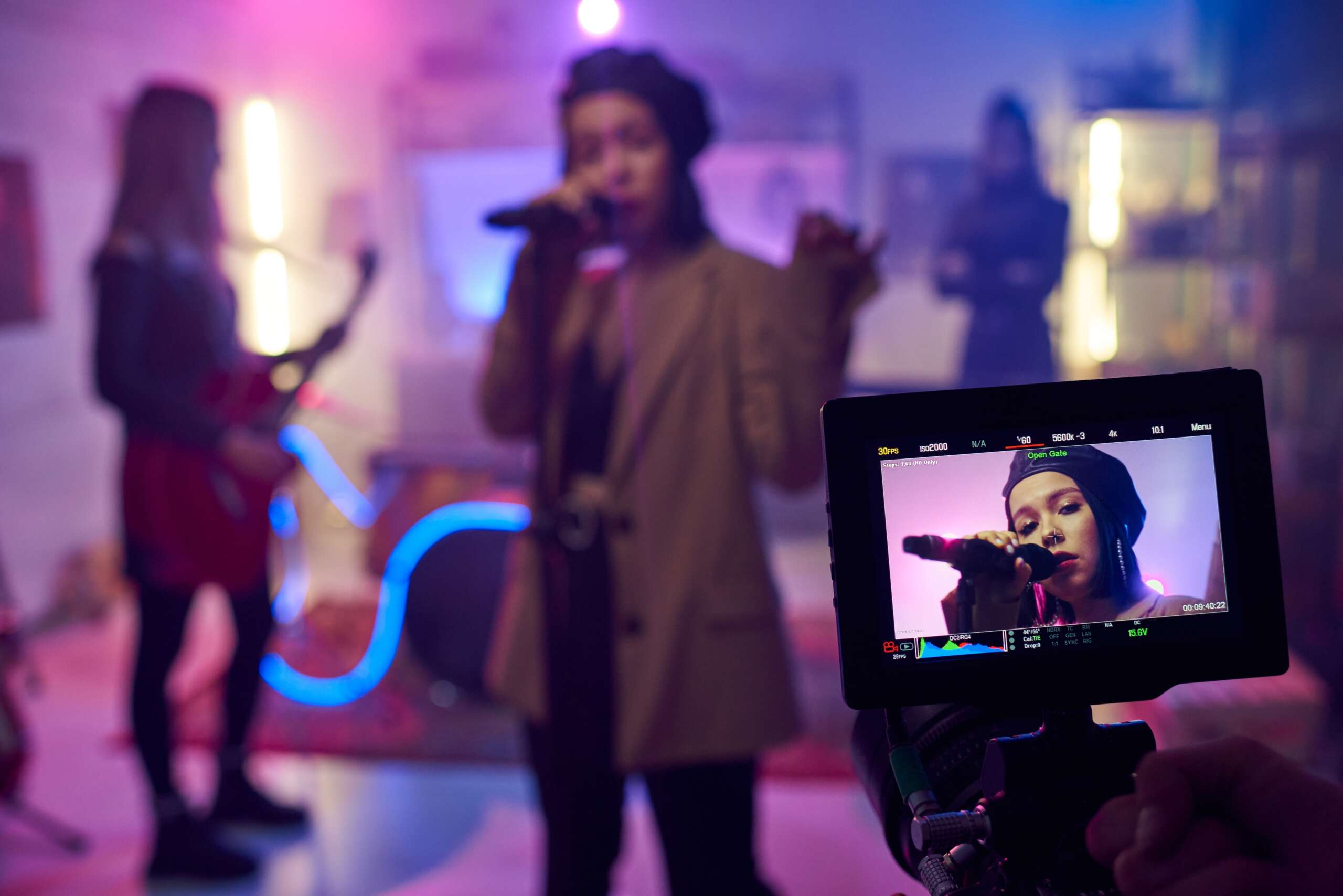
Course Information
Course Name: Music Video Production
Course Code: BFS3104
Programme: Bachelor of Arts in Film Studies with Honours
Academic Year: 2025–2026
Course Lecturer: RUTABINGWA Jacques
Credits: 15
Level/Semester: Year III, Trimestre 1
Delivery Mode: Face-to-face lectures with practical production sessions, studio and field exercises, project-based learning, and Moodle support
Welcome Message
Welcome to Music Video Production.
This course introduces students to the creative, technical, and production processes involved in creating professional music videos. Music videos combine visual storytelling, performance, cinematography, editing, sound, and artistic direction to communicate the identity and emotions of a musical work.
Throughout this course, students will explore the complete music video production process, from concept development and pre-production planning to filming, editing, post-production, and final delivery. Through practical projects, learners will develop the skills required to create visually engaging and professionally produced music content for television, online platforms, and digital media distribution.
Course Overview
The Music Video Production course provides students with advanced knowledge and practical experience in the planning, production, and post-production of music videos. The course examines the relationship between music, visual storytelling, performance, and cinematic techniques used in contemporary music production.
Students will explore creative concepts, scriptwriting, storyboarding, directing, cinematography, lighting design, choreography coordination, camera techniques, and production management. The course emphasizes the development of visual styles that effectively communicate musical themes, emotions, and artist identity.
The module also covers technical aspects of music video production, including camera operation, location selection, studio production, multi-camera setups, synchronization of visuals with music, editing techniques, visual effects, color grading, and digital distribution strategies.
Through individual and group production projects, students will experience the complete workflow of creating a music video, including collaboration with musicians, performers, directors, cinematographers, editors, and production teams. By the end of the course, students will be able to design, produce, and deliver professional-quality music videos suitable for various media platforms.
Learning Objectives
The course aims to:
- Introduce the creative and technical principles of music video production.
- Develop skills in concept development and visual storytelling for music content.
- Understand the planning and organization of music video productions.
- Apply cinematography, lighting, and directing techniques to music videos.
- Develop skills in working with artists, performers, and production teams.
- Explore different styles and genres of music video production.
- Apply professional camera and editing techniques in music video creation.
- Synchronize visual elements with music and performance.
- Use post-production techniques including editing, effects, and color grading.
- Understand distribution strategies for music videos across digital platforms.
- Develop professional production management skills for creative media projects.
Learning Outcomes
Upon successful completion of this course, students will be able to:
- Explain the creative and technical processes involved in music video production.
- Develop music video concepts, treatments, scripts, and storyboards.
- Plan and manage pre-production activities for music video projects.
- Apply cinematography and lighting principles to create effective visual narratives.
- Direct performers and coordinate creative teams during production.
- Operate cameras and production equipment effectively.
- Produce music videos using professional production workflows.
- Synchronize music, visuals, and performance elements during editing.
- Apply advanced editing, visual effects, and color grading techniques.
- Evaluate the artistic and technical quality of completed music video projects.
- Prepare music videos for professional distribution on television and digital platforms.
Learning Resources
- Lecturer’s notes and presentations
- Music video production textbooks
- Film directing and cinematography references
- Digital video production manuals
- Editing software tutorials
- Camera and lighting equipment guides
- Case studies of professional music videos
- Online video production resources
- Moodle learning materials
Learning Activities
- Interactive lectures
- Analysis of professional music videos
- Concept development workshops
- Script and storyboard development exercises
- Camera and lighting practical sessions
- Studio and location shooting exercises
- Music video production projects
- Editing and post-production workshops
- Group production assignments
- Peer review and creative feedback sessions
- Moodle-based learning activities
Assessment
Assignment: 10 Marks
Continuous Assessment Test (CAT): 10 Marks
Mid-Term Examination: 40 Marks
Final Examination: 40 Marks
Course Duration
15 Weeks
- Teacher: content creator
- Teacher: Franklyne MUDULIA MANONO
Course Information
- Course Name: Multimedia Advertising
- Course Code: BFS3104
- Programme: Bachelor of Arts in Film Studies with Honours
- Academic Year: 2025–2026
- Course Lecturer: Rutabingwa Jacques
- Credits: 15
- Level/Semester: Year III, Trimester 1
- Delivery Mode: Face-to-face lectures, studio/field exercises, project-based learning, Moodle support
- Analyze the historical trends, ethical standards, and cultural impact of multimedia advertising.
- Develop original creative concepts, campaign briefs, and storyboards aligned with specific brand identities.
- Master specialized cinematography, lighting, and framing techniques for product and commercial shoots.
- Manage the logistical, budgetary, and legal aspects of a studio and field advertising production.
- Execute advanced post-production techniques, including pacing, graphics integration, and color grading for commercials.
- Design a comprehensive pre-production portfolio including creative briefs, scripts, budgets, and shot lists.
- Direct talent and technical crew effectively during product-focused and narrative-driven commercial shoots.
- Operate professional camera, lighting, and audio gear to meet industry-standard broadcast specifications.
- Edit high-impact commercial spots that demonstrate precise pacing, messaging clarity, and visual continuity.
- Deliver a polished, platform-ready advertisement tailored for digital streaming, television, and social media.
- Textbook: Advertising by Design: Generating and Designing Creative Concepts (Current Edition)
- Equipment: Professional DSLR/Cinema cameras, studio lighting kits, modifiers, and audio systems
- Software: Adobe Premiere Pro, DaVinci Resolve, or After Effects
- Digital: Moodle LMS for lecture notes, brief templates, rubrics, and discussion forums
- Lectures: Interactive classroom sessions analyzing award-winning ad campaigns and market trends.
- Workshops: Hands-on studio exercises focusing on product lighting and high-impact visual sequencing.
- Fieldwork: On-location filming sessions executing student-designed commercial treatments.
- Critiques: Peer review sessions to evaluate ad pacing, messaging clarity, and final color correction.
- Assignment: (10 Marks)
- Continuous Assessment Test (CAT): (10 Marks)
- Mid-Term Examination: (40 Marks)
- Final Examination: (40 Marks)
- Total Weeks: 15 weeks
- Teacher: content creator
- Teacher: Franklyne MUDULIA MANONO

MULTIMEDIA ADVERTISING
Course Information
Course Name: Multimedia Advertising
Course Code: BFS3104
Programme: Bachelor of Arts in Film Studies with Honours
Academic Year: 2025–2026
Course Lecturer: Valens NDAHINDURWA
Credits: 15
Level/Semester: Year III, Trimestre 1
Delivery Mode: Face-to-face lectures with practical advertising workshops, multimedia production exercises, creative projects, case studies, and Moodle support.
Welcome Message
Welcome to Multimedia Advertising.
This course introduces students to the creative, strategic, and technical processes involved in developing advertising content using different forms of media. In today’s digital environment, successful advertising requires a combination of visual communication, storytelling, branding, technology, and audience engagement strategies.
Throughout this course, students will explore the complete multimedia advertising process, from identifying target audiences and developing creative concepts to producing and distributing professional advertising materials across television, radio, print, websites, and social media platforms. Through practical projects, learners will develop the skills needed to create effective and engaging advertising campaigns.
Course Overview
The Multimedia Advertising course provides students with theoretical knowledge and practical skills required to design, produce, and evaluate advertising content using multimedia technologies. The course examines advertising principles, creative strategies, consumer behavior, branding, digital communication, and media production techniques.
Students will explore the development of advertising concepts, campaign planning, scriptwriting, graphic design, photography, video production, audio advertising, animation, and digital marketing approaches. The course emphasizes the integration of different media formats to create powerful advertising messages that communicate effectively with target audiences.
The module also covers practical aspects of multimedia advertising production, including visual design principles, video advertisement creation, social media advertising, online campaign management, and evaluation of advertising effectiveness.
Through individual and group projects, students will experience the complete workflow of developing multimedia advertising campaigns, from research and planning to production, presentation, and distribution. By the end of the course, learners will be able to create professional advertising materials suitable for modern media platforms.
Learning Objectives
The course aims to:
- Introduce the principles and concepts of multimedia advertising.
- Develop creative skills in advertising concept development and campaign planning.
- Understand audience analysis and consumer behavior in advertising.
- Apply visual communication principles in advertising production.
- Develop skills in creating advertisements for digital and traditional media.
- Use photography, graphic design, video, and audio production techniques in advertising.
- Understand branding and marketing communication strategies.
- Explore digital advertising platforms and social media campaigns.
- Apply ethical and professional standards in advertising practice.
- Develop skills in presenting and evaluating advertising campaigns.
Learning Outcomes
Upon successful completion of this course, students will be able to:
- Explain the role and importance of multimedia advertising in modern communication.
- Develop creative advertising concepts and campaign strategies.
- Identify target audiences and design appropriate advertising messages.
- Produce multimedia advertisements using professional production techniques.
- Apply graphic design, photography, video, and audio skills in advertising projects.
- Create advertising content for television, radio, web, and social media platforms.
- Apply branding principles to advertising campaigns.
- Evaluate the effectiveness of multimedia advertising materials.
- Use digital platforms to distribute and promote advertising content.
- Demonstrate professional skills in managing multimedia advertising projects.
Learning Resources
- Lecturer’s notes and presentations
- Multimedia advertising textbooks
- Advertising and marketing communication references
- Digital marketing resources
- Graphic design and branding manuals
- Photography and video production guides
- Adobe Creative Cloud tutorials (Photoshop, Illustrator, Premiere Pro, After Effects)
- Case studies of successful advertising campaigns
- Online advertising platforms and industry reports
- Moodle learning materials
Learning Activities
- Interactive lectures
- Advertising campaign analysis
- Creative concept development workshops
- Audience research exercises
- Script and storyboard development
- Graphic design practical sessions
- Photography and video advertisement production
- Audio advertising exercises
- Social media advertising projects
- Group multimedia advertising campaigns
- Student presentations and peer feedback sessions
- Moodle-based learning activities
Assessment Methods
- Assignment: 10 Marks
- Continuous Assessment Test (CAT): 10 Marks
- Mid-Term Examination: 40 Marks
- Final Examination: 40 Marks
Course Duration
15 Weeks
- Teacher: Valens ndahindurwa
Course Information
Course Name: Film Lighting II
Course Code: BFS 3101
Programme: Bachelor of Arts in Film Studies with Honours
Academic Year: 2025–2026
Course Lecturer: HABINSHUTI EMMANUEL
Credits: 10
Level/Semester: Year III, Trimestre 1
Delivery Mode: Face-to-face lectures with intensive practical lighting workshops, studio and location exercises, project-based learning, and Moodle support.
Welcome Message
Welcome to Film Lighting II.
This course builds upon the foundational concepts of cinematic lighting by introducing advanced lighting techniques used in professional film and television production. Lighting is one of the most powerful visual storytelling tools, shaping mood, atmosphere, character, and audience perception.
Throughout this course, students will develop practical skills in designing and implementing sophisticated lighting setups for a variety of production environments. Through studio exercises, location shoots, and collaborative production projects, learners will gain hands-on experience using professional lighting equipment and industry-standard workflows.
Course Overview
The Film Lighting II course provides students with advanced theoretical knowledge and practical experience in cinematic lighting design and execution. The course explores professional lighting techniques used in narrative films, documentaries, television productions, commercials, and digital media.
Students will study lighting aesthetics, color theory, exposure control, lighting continuity, motivated lighting, high-key and low-key lighting, three-point lighting variations, practical lighting, and advanced lighting for indoor and outdoor productions. The course also examines lighting for different genres, moods, and visual styles while emphasizing collaboration between the cinematographer, director, production designer, and gaffer.
Practical sessions focus on the safe use of professional lighting equipment, including LED fixtures, Fresnel lights, HMIs, soft lights, reflectors, diffusion materials, flags, and lighting control accessories. Students will learn to plan, install, operate, and evaluate lighting setups for diverse production scenarios.
By the end of the course, learners will be capable of designing and executing professional lighting schemes that enhance storytelling, visual quality, and production value across various film and television productions.
Learning Objectives
The course aims to:
- Develop advanced knowledge of cinematic lighting techniques.
- Strengthen practical skills in designing professional lighting setups.
- Apply lighting principles to support visual storytelling.
- Understand color temperature, exposure, and lighting continuity.
- Operate professional film lighting equipment safely and efficiently.
- Explore lighting techniques for different genres and production environments.
- Develop problem-solving skills for studio and location lighting challenges.
- Collaborate effectively with cinematographers, directors, and production crews.
- Apply creative lighting styles to achieve specific moods and visual effects.
- Prepare students for professional lighting roles in the film industry.
Learning Outcomes
Upon successful completion of this course, students will be able to:
- Explain advanced principles of cinematic lighting.
- Design professional lighting plans for various film productions.
- Apply lighting techniques appropriate for different shooting environments.
- Use professional lighting equipment safely and effectively.
- Control exposure, contrast, and color temperature to achieve desired visual effects.
- Create lighting setups that enhance mood, character, and narrative.
- Solve technical lighting challenges during production.
- Collaborate effectively with production teams to achieve artistic objectives.
- Evaluate the effectiveness of lighting in completed film projects.
- Produce visually compelling scenes that meet professional production standards.
Learning Resources
- Lecturer's notes and presentations
- Cinematography and film lighting textbooks
- Professional lighting equipment manuals
- Camera exposure and color science references
- Film lighting case studies
- Industry lighting tutorials and demonstrations
- Studio lighting equipment and accessories
- Professional filmmaking journals and articles
- Online learning resources
- Moodle learning materials
Learning Activities
- Interactive lectures
- Studio lighting demonstrations
- Practical lighting workshops
- Three-point lighting exercises
- Indoor and outdoor lighting projects
- Scene recreation and lighting analysis
- Camera and exposure practical sessions
- Group production assignments
- Film lighting critiques and peer reviews
- Independent lighting design projects
- Moodle-based learning activities
Assessment Methods
- Assignment: 10 Marks
- Continuous Assessment Test (CAT): 10 Marks
- Mid-Term Examination: 40 Marks
- Final Examination: 40 Marks
Course Duration
15 Weeks
- Teacher: HABINSHUTI EMMANUEL
DIGITAL STUDIO RECORDING & SOUND DESIGN
Course Information
Course Name: Digital Studio Recording & Sound Design
Course Code: BFS3502
Programme: Bachelor of Arts in Film Studies with Honours
Academic Year: 2025–2026
Course Lecturer: HABINSHUTI Emmanuel
Credits: 15
Level/Semester: Year III, Trimestre 1
Delivery Mode: Face-to-face lectures with practical studio sessions, digital audio production workshops, project-based learning, and Moodle support.
Welcome Message
Welcome to Digital Studio Recording & Sound Design.
This course provides students with advanced knowledge and practical skills in professional audio recording, editing, mixing, and sound design for film, television, music, and digital media. High-quality sound is essential to storytelling, audience engagement, and overall production quality.
Throughout this course, students will gain hands-on experience using professional recording studios, digital audio workstations (DAWs), microphones, audio interfaces, and sound processing tools. By combining theory with practical projects, learners will develop the technical and creative abilities required to produce professional-quality audio content for a variety of multimedia productions.
Course Overview
The Digital Studio Recording & Sound Design course equips students with the knowledge and practical competencies required to record, edit, mix, and design sound for professional media productions. The course explores the principles of digital audio, acoustics, studio setup, microphone techniques, signal flow, recording workflows, and sound design.
Students will learn how to capture high-quality dialogue, music, ambience, and sound effects using professional recording equipment and industry-standard digital audio workstations. The course also examines audio editing, equalization, compression, noise reduction, reverb, sound restoration, Foley production, ADR (Automated Dialogue Replacement), and surround sound concepts.
Practical sessions emphasize creative sound design techniques for films, documentaries, television, podcasts, commercials, and digital media. Students will work on individual and collaborative studio projects that simulate real-world audio production environments.
By the end of the course, learners will be able to produce, edit, mix, and deliver professional-quality audio projects that meet industry standards for film and multimedia production.
Learning Objectives
The course aims to:
- Introduce advanced principles of digital audio recording and sound design.
- Develop practical skills in professional studio recording techniques.
- Understand studio acoustics and audio signal flow.
- Apply microphone selection and placement techniques for different recording situations.
- Develop competency in digital audio editing and mixing.
- Apply sound design techniques for film, television, and multimedia productions.
- Explore Foley recording, ADR, and sound effects creation.
- Use professional Digital Audio Workstations (DAWs) for audio production.
- Understand audio mastering and delivery standards.
- Develop collaborative and professional studio production skills.
Learning Outcomes
Upon successful completion of this course, students will be able to:
- Explain the principles of digital studio recording and sound design.
- Operate professional recording studio equipment safely and efficiently.
- Select and position microphones for various recording applications.
- Record high-quality dialogue, music, ambience, and sound effects.
- Edit, mix, and process digital audio using industry-standard software.
- Design creative soundscapes that enhance storytelling.
- Produce Foley effects and perform ADR for film productions.
- Apply audio processing techniques such as equalization, compression, and noise reduction.
- Prepare audio productions that meet professional broadcast and streaming standards.
- Evaluate the technical and artistic quality of completed audio productions.
Learning Resources
- Lecturer's notes and presentations
- Digital audio production textbooks
- Sound recording and sound design manuals
- Digital Audio Workstation (DAW) tutorials (Pro Tools, Adobe Audition, Reaper, Audacity)
- Studio recording equipment manuals
- Professional microphone guides
- Film sound and audio post-production references
- Online audio engineering resources
- Industry case studies
- Moodle learning materials
Learning Activities
- Interactive lectures
- Studio recording practical sessions
- Microphone placement exercises
- Digital audio editing workshops
- Sound design and Foley production exercises
- Dialogue recording and ADR sessions
- Audio mixing and mastering workshops
- Group studio production projects
- Peer review and audio critique sessions
- Independent sound design assignments
- Moodle-based learning activities
Assessment Methods
- Assignment: 10 Marks
- Continuous Assessment Test (CAT): 10 Marks
- Mid-Term Examination: 40 Marks
- Final Examination: 40 Marks
Course Duration
15 Weeks
- Teacher: HABINSHUTI EMMANUEL

RESEARCH METHODS
Course Information
Course Name: Research Methods
Course Code: BFS3506
Programme: Bachelor of Arts in Film Studies with Honours
Academic Year: 2025–2026
Course Lecturer: Dr. Mwangi Haron
Credits: 20
Level/Semester: Year III, Trimestre 1
Delivery Mode: Face-to-face lectures, seminars, research workshops, supervised independent study, project-based learning, and Moodle support.
Welcome Message
Welcome to Research Methods.
This course introduces students to the principles and practices of academic and professional research in film, media, and communication studies. Research is essential for generating new knowledge, solving industry challenges, and supporting evidence-based decision-making in creative and media professions.
Throughout this course, students will develop the skills required to identify research problems, review literature, design research projects, collect and analyze data, and communicate research findings effectively. Through practical exercises and guided research activities, learners will build a strong foundation for conducting ethical and rigorous academic research.
Course Overview
The Research Methods course equips students with the theoretical knowledge and practical skills necessary to conduct systematic research in film studies, media, and related disciplines. The course introduces the philosophy of research, research design, qualitative and quantitative approaches, mixed methods research, and ethical considerations in academic inquiry.
Students will explore techniques for identifying research problems, formulating research questions and hypotheses, conducting literature reviews, selecting appropriate sampling methods, designing data collection instruments, and applying data analysis techniques. The course also covers academic writing, referencing styles, plagiarism prevention, and the presentation of research findings.
Practical sessions guide students through the development of a complete research proposal, preparing them for independent research projects and their final-year dissertations. Emphasis is placed on critical thinking, analytical skills, and the application of research findings to address contemporary issues in the film and media industries.
By the end of the course, students will be able to design, conduct, analyze, and present scholarly research that meets academic and professional standards.
Learning Objectives
The course aims to:
- Introduce the fundamental principles and concepts of research.
- Develop skills in identifying and formulating research problems.
- Understand qualitative, quantitative, and mixed research approaches.
- Develop competency in conducting literature reviews.
- Apply appropriate research designs and methodologies.
- Develop skills in data collection, analysis, and interpretation.
- Understand ethical principles governing academic research.
- Strengthen academic writing and referencing skills.
- Prepare students to develop professional research proposals.
- Foster critical thinking and evidence-based problem-solving skills.
Learning Outcomes
Upon successful completion of this course, students will be able to:
- Explain key concepts and principles of research methodology.
- Identify and formulate research problems, objectives, and questions.
- Conduct comprehensive literature reviews using scholarly sources.
- Select appropriate research designs and data collection methods.
- Design reliable and valid research instruments.
- Collect, analyze, and interpret qualitative and quantitative data.
- Apply ethical standards throughout the research process.
- Write academic research proposals and reports using appropriate referencing styles.
- Present and defend research findings effectively.
- Conduct independent research relevant to film, media, and communication studies.
Learning Resources
- Lecturer's notes and presentations
- Research methodology textbooks
- Academic journals in film, media, and communication studies
- Research proposal and thesis writing guides
- APA (or institutional) referencing manuals
- Statistical analysis software guides (e.g., SPSS, Excel)
- Qualitative research analysis resources
- Online academic databases and digital libraries
- University research policy and ethics guidelines
- Moodle learning materials
Learning Activities
- Interactive lectures
- Research methodology seminars
- Literature review workshops
- Research proposal writing exercises
- Academic writing and referencing workshops
- Data collection and survey design activities
- Qualitative and quantitative data analysis exercises
- Student presentations and research discussions
- Peer review of research proposals
- Independent research projects
- Moodle-based learning activities
Assessment Methods
- Assignment: 10 Marks
- Continuous Assessment Test (CAT): 10 Marks
- Mid-Term Examination: 40 Marks
- Final Examination: 40 Marks
Course Duration
15 Weeks
- Teacher: Dr Mwangi Haron