
Course Information
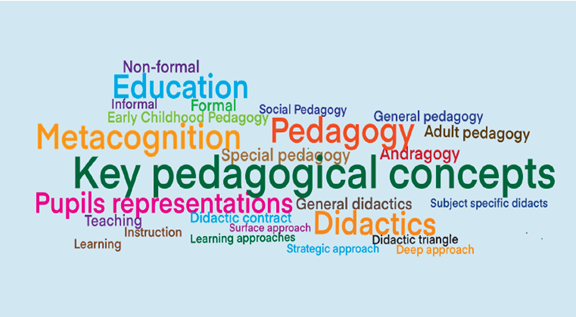
Course Name: General Pedagogy and Teaching Methodology
Course Code: EDG1201
Programme: Bachelor of Education with Honours in Mathematics and Physics
Academic Year: 2024–2025
Course Lecturer:
Credits: 15
Level/Semester: Year I, Trimestre II
Delivery Mode: Lectures, teaching demonstrations, micro-teaching, seminars, practical activities, and Moodle support.
Course Overview
This course introduces teaching principles, instructional methods, classroom management, lesson planning, curriculum implementation, and assessment techniques.
Students develop practical teaching skills through demonstrations, lesson preparation, and classroom-based activities.
Learning Objectives
Students should be able to:
- Understand principles of pedagogy.
- Apply effective teaching methods.
- Prepare lesson plans.
- Manage classrooms effectively.
- Apply assessment techniques.
Learning Outcomes
Students will be able to:
- Explain teaching and learning principles.
- Develop instructional materials.
- Conduct effective lessons.
- Apply learner-centered approaches.
- Evaluate learner performance.
Assessment Methods
- Assignment: 10 Marks
- Continuous Assessment Test (CAT): 10 Marks
- Mid-Term Examination: 40 Marks
- Final Examination: 40 Marks
Course Duration
15 Weeks
- Teacher: Edison ISHIMWE
Course Information
Course Name: Educational Psychology
Course Code: EDP1201
Programme: Bachelor of Education with Honours in Mathematics and Physics
Academic Year: 2024–2025
Course Lecturer:
Credits: 15
Level/Semester: Year I, Trimestre II
Delivery Mode: Face-to-face lectures, tutorials, classroom observations, discussions, case studies, and Moodle support.
Welcome Message
Welcome to Educational Psychology.
This course introduces students to psychological principles that explain learning, development, motivation, and learner behavior. It prepares future teachers to understand students' needs and create effective learning environments.
Course Overview
The course examines human development, learning theories, motivation, intelligence, personality, individual differences, classroom behavior, and educational applications of psychology.
Students explore how psychological knowledge supports teaching effectiveness, learner assessment, and classroom management.
Learning Objectives
Students should be able to:
- Understand psychological foundations of education.
- Explain learning and development theories.
- Analyze learner behavior.
- Understand motivation and individual differences.
- Apply psychology principles in teaching.
Learning Outcomes
Students will be able to:
- Explain educational psychology concepts.
- Apply learning theories in teaching.
- Understand learner differences.
- Develop supportive learning environments.
- Use psychological principles in classroom practice.
Assessment Methods
- Assignment: 10 Marks
- Continuous Assessment Test (CAT): 10 Marks
- Mid-Term Examination: 40 Marks
- Final Examination: 40 Marks
Course Duration
15 Weeks
- Teacher: Edison ISHIMWE

Course Information
Course Name: Introduction to Research Methodology
Course Code: IRM1201
Programme: Bachelor of Education with Honours in Mathematics and Physics
Academic Year: 2024–2025
Course Lecturer:
Credits: 10
Level/Semester: Year I, Trimestre II
Delivery Mode: Face-to-face lectures, research exercises, seminars, assignments, presentations, and Moodle support.
Welcome Message
Welcome to Introduction to Research Methodology.
This course introduces students to the principles and processes of academic research. It equips learners with essential skills for identifying research problems, collecting information, analyzing data, and presenting research findings ethically.
Course Overview
The course covers research concepts, research designs, qualitative and quantitative methods, data collection techniques, sampling, data analysis, research ethics, and academic report writing.
Students will learn how research contributes to knowledge creation and problem-solving in education, mathematics, physics, and other disciplines.
Learning Objectives
Students should be able to:
- Understand the purpose and importance of research.
- Identify research problems and questions.
- Differentiate research approaches.
- Select appropriate research methods.
- Apply ethical research principles.
- Analyze and present research findings.
Learning Outcomes
Students will be able to:
- Explain research concepts and processes.
- Develop research questions and objectives.
- Select suitable research methodologies.
- Apply data collection techniques.
- Interpret research findings.
- Prepare basic research reports.
Assessment Methods
- Assignment: 10 Marks
- Continuous Assessment Test (CAT): 10 Marks
- Mid-Term Examination: 40 Marks
- Final Examination: 40 Marks
Course Duration
15 Weeks
- Teacher: Edison ISHIMWE
Course Information
Course Name: Statistics and Probability I
Course Code: MAT1202
Programme: Bachelor of Education with Honours in Mathematics and Physics
Academic Year: 2024–2025
Course Lecturer:
Credits: 10
Level/Semester: Year I, Trimestre II
Delivery Mode: Face-to-face lectures, tutorials, problem-solving sessions, practical exercises, assignments, and Moodle support.
Welcome Message
Welcome to Statistics and Probability I.
This course introduces students to the fundamental concepts of statistics and probability used in mathematics, science, education, and research. It develops students' ability to collect, organize, analyze, and interpret data while understanding uncertainty and random events.
Through theoretical lessons and practical exercises, students will develop analytical skills necessary for making informed decisions based on statistical evidence.
Course Overview
The Statistics and Probability I course introduces students to basic statistical concepts and probability theory. Topics include data collection, classification and presentation of data, measures of central tendency, measures of dispersion, probability concepts, random variables, probability distributions, and statistical interpretation.
Students will learn how to apply statistical techniques to solve problems in mathematics, physics, education, and real-life situations. The course also introduces the use of statistical tools for data analysis and decision-making.
By the end of the course, students will have developed foundational statistical skills necessary for advanced mathematics, research, and professional applications.
Learning Objectives
Students should be able to:
- Understand fundamental concepts of statistics and probability.
- Collect, organize, and present statistical data.
- Calculate and interpret measures of central tendency and dispersion.
- Understand basic probability principles.
- Apply probability concepts to real-world problems.
- Analyze and interpret statistical information.
- Develop skills in statistical reasoning and problem-solving.
Learning Outcomes
Students will be able to:
- Explain basic statistical and probability concepts.
- Organize and represent data using appropriate methods.
- Calculate statistical measures accurately.
- Apply probability rules to solve problems.
- Interpret statistical results effectively.
- Use statistical methods in academic and research contexts.
Learning Resources
- Lecturer's notes and presentations
- Statistics textbooks
- Probability reference books
- Mathematical tables and calculators
- Statistical software tools
- Academic journals
- Moodle learning materials
Learning Activities
- Interactive lectures
- Problem-solving exercises
- Data analysis practicals
- Group discussions
- Assignments
- Student presentations
- Moodle-based activities
Assessment Methods
- Assignment: 10 Marks
- Continuous Assessment Test (CAT): 10 Marks
- Mid-Term Examination: 40 Marks
- Final Examination: 40 Marks
Course Duration
15 Weeks
- Teacher: Edison ISHIMWE