
Course Information
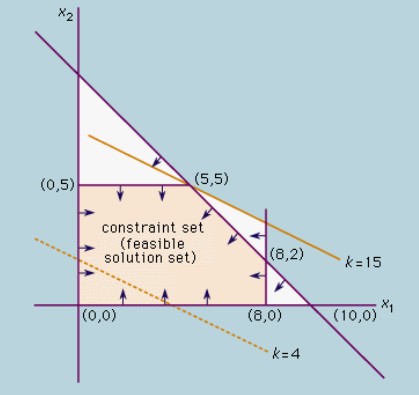
Course Name: Numerical Analysis and Linear Programming
Course Code: MAT4302
Programme: Bachelor of Education with Honours in Mathematics and Physics
Academic Year: 2024–2025
Course Lecturer:
Credits: 10
Level/Semester: Year II, Trimestre III
Delivery Mode: Face-to-face lectures, tutorials, computer-based practical sessions, mathematical modeling exercises, and Moodle support.
Welcome Message
Welcome to Numerical Analysis and Linear Programming.
This course introduces numerical methods and optimization techniques used to solve mathematical problems that cannot be solved analytically. It also provides students with the principles of linear programming for decision-making and resource optimization.
Course Overview
The course covers numerical error analysis, root-finding methods, numerical differentiation and integration, interpolation, numerical solutions of differential equations, matrix computations, simplex method, duality theory, transportation models, assignment problems, and optimization techniques.
Students apply numerical algorithms and optimization models to engineering, physics, economics, and operations research problems.
Learning Objectives
Students should be able to:
- Understand numerical computation techniques.
- Solve equations using numerical methods.
- Apply interpolation and approximation methods.
- Formulate and solve linear programming problems.
- Use optimization techniques for decision-making.
- Apply computational tools in mathematical modeling.
Learning Outcomes
Students will be able to:
- Solve mathematical problems using numerical methods.
- Analyze numerical errors and approximations.
- Apply matrix methods in computation.
- Formulate optimization models.
- Solve linear programming problems using the simplex method.
- Apply numerical analysis in scientific and engineering applications.
Assessment Methods
- Assignment: 10 Marks
- Continuous Assessment Test (CAT): 10 Marks
- Mid-Term Examination: 40 Marks
- Final Examination: 40 Marks
Course Duration
15 Weeks
- Teacher: Edison ISHIMWE

Course Information
Course Name: Data Communication and Computer Networks
Course Code: CSE4303
Programme: Bachelor of Education with Honours in Mathematics and Physics
Academic Year: 2024–2025
Course Lecturer:
Credits: 10
Level/Semester: Year II, Trimestre III
Delivery Mode: Face-to-face lectures, networking laboratory practical sessions, simulations, tutorials, assignments, and Moodle support.
Welcome Message
Welcome to Data Communication and Computer Networks.
This course introduces students to the principles of data communication and computer networking, enabling them to understand how information is transmitted, processed, and managed across modern communication systems.
Course Overview
The course covers network fundamentals, OSI and TCP/IP models, transmission media, network devices, IP addressing, routing, switching, LANs, WANs, wireless networking, network security, and network troubleshooting.
Practical laboratory activities include network configuration, simulation, and troubleshooting using networking tools and software.
Learning Objectives
Students should be able to:
- Understand networking fundamentals.
- Explain communication protocols.
- Configure basic computer networks.
- Analyze network performance.
- Apply network security concepts.
- Troubleshoot common networking problems.
Learning Outcomes
Students will be able to:
- Explain data communication principles.
- Configure LAN and basic network services.
- Apply TCP/IP networking concepts.
- Analyze network architectures.
- Demonstrate networking troubleshooting skills.
Assessment Methods
- Assignment: 10 Marks
- Continuous Assessment Test (CAT): 10 Marks
- Mid-Term Examination: 40 Marks
- Final Examination: 40 Marks
Course Duration
15 Weeks
- Teacher: Edison ISHIMWE
Course Information
Course Name: Educational Measurement and Evaluation
Course Code: EDM4301
Programme: Bachelor of Education with Honours in Mathematics and Physics
Academic Year: 2024–2025
Course Lecturer:
Credits: 10
Level/Semester: Year II, Trimestre III
Delivery Mode: Face-to-face lectures, seminars, practical assessment workshops, tutorials, assignments, and Moodle support.
Welcome Message
Welcome to Educational Measurement and Evaluation.
This course equips future educators with the knowledge and skills required to design, administer, interpret, and evaluate educational assessments that improve teaching and learning.
Course Overview
The course examines principles of educational measurement, classroom assessment, test construction, grading systems, reliability, validity, formative and summative assessment, educational statistics, and program evaluation.
Students develop practical skills in preparing quality assessment instruments and interpreting learner performance data.
Learning Objectives
Students should be able to:
- Understand educational assessment principles.
- Design classroom tests.
- Evaluate learner achievement.
- Apply statistical techniques in assessment.
- Interpret assessment results.
Learning Outcomes
Students will be able to:
- Develop valid and reliable assessment tools.
- Analyze learner performance.
- Apply educational evaluation techniques.
- Interpret assessment data.
- Improve teaching through assessment.
Assessment Methods
- Assignment: 10 Marks
- Continuous Assessment Test (CAT): 10 Marks
- Mid-Term Examination: 40 Marks
- Final Examination: 40 Marks
Course Duration
15 Weeks
- Teacher: Edison ISHIMWE
Course Information
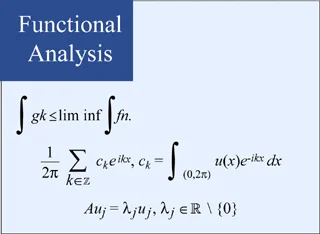
Course Name: Functional Analysis
Course Code: MAT4301
Programme: Bachelor of Education with Honours in Mathematics and Physics
Academic Year: 2024–2025
Course Lecturer:
Credits: 10
Level/Semester: Year III, Trimestre III
Delivery Mode: Face-to-face lectures, tutorials, mathematical problem-solving sessions, assignments, and Moodle support.
Welcome Message
Welcome to Functional Analysis.
This course introduces advanced mathematical concepts involving vector spaces, normed spaces, Banach spaces, Hilbert spaces, and linear operators that are fundamental in modern mathematics and theoretical physics.
Course Overview
The course covers vector spaces, normed linear spaces, metric spaces, Banach and Hilbert spaces, bounded linear operators, inner products, orthogonality, convergence, and applications in mathematical modeling and quantum mechanics.
Learning Objectives
Students should be able to:
- Understand abstract vector spaces.
- Analyze normed and metric spaces.
- Study linear operators.
- Apply functional analysis in mathematics and physics.
- Develop advanced mathematical reasoning.
Learning Outcomes
Students will be able to:
- Explain functional analysis concepts.
- Solve problems involving normed spaces.
- Analyze linear transformations.
- Apply Hilbert and Banach space theory.
- Use functional analysis in scientific applications.
Assessment Methods
- Assignment: 10 Marks
- Continuous Assessment Test (CAT): 10 Marks
- Mid-Term Examination: 40 Marks
- Final Examination: 40 Marks
Course Duration
15 Weeks
- Teacher: Edison ISHIMWE
Course Information
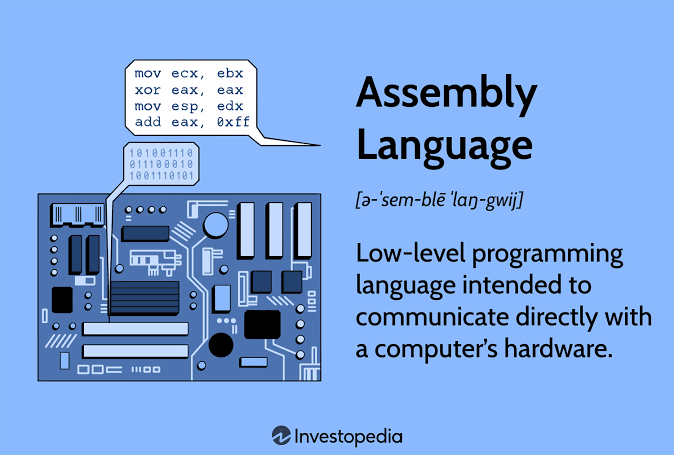
Course Name: Computer Architecture and Assembly
Course Code: CSE4302
Programme: Bachelor of Education with Honours in Mathematics and Computer Science
Academic Year: 2024–2025
Course Lecturer:
Credits: 10
Level/Semester: Year II, Trimestre III
Delivery Mode: Lectures, laboratory practical sessions, programming exercises, tutorials, and Moodle support.
Welcome Message
Welcome to Computer Architecture and Assembly.
This course introduces students to computer organization, processor architecture, memory systems, and Assembly language programming. It provides a foundation for understanding how computer hardware executes software instructions.
Course Overview
Topics include digital logic review, CPU organization, instruction sets, memory hierarchy, input/output systems, addressing modes, Assembly language programming, interrupts, pipelining, and processor performance.
Learning Objectives
Students should be able to:
- Understand computer architecture principles.
- Explain processor organization.
- Write Assembly language programs.
- Analyze memory systems.
- Evaluate computer performance.
Learning Outcomes
Students will be able to:
- Explain computer hardware architecture.
- Develop simple Assembly programs.
- Analyze processor operations.
- Understand memory hierarchy.
- Apply computer organization concepts.
Assessment Methods
- Assignment: 10 Marks
- Continuous Assessment Test (CAT): 10 Marks
- Mid-Term Examination: 40 Marks
- Final Examination: 40 Marks
Course Duration
15 Weeks
- Teacher: Edison ISHIMWE

Course Information
Course Name: Operating System
Course Code: CSE4301
Programme: Bachelor of Education with Honours in Mathematics and Computer Science
Academic Year: 2024–2025
Course Lecturer: CHEBET K ASUMANI
Credits: 10
Level/Semester: Year II, Trimestre III
Delivery Mode: Face-to-face lectures, computer laboratory practical sessions, tutorials, demonstrations, assignments, and Moodle support.
Welcome Message
Welcome to Operating System.
This course introduces students to the principles, design, and functionality of modern operating systems. It provides a comprehensive understanding of how operating systems manage computer hardware, software resources, and user interactions.
Course Overview
The course covers operating system concepts, process management, CPU scheduling, memory management, file systems, input/output management, deadlocks, synchronization, virtualization, security, and system administration. Practical sessions provide hands-on experience with Linux and Windows operating systems.
Learning Objectives
Students should be able to:
- Understand the functions of operating systems.
- Explain process and memory management.
- Analyze file systems and storage management.
- Understand operating system security.
- Perform basic system administration tasks.
- Apply operating system concepts in computing.
Learning Outcomes
Students will be able to:
- Explain operating system architecture.
- Manage processes and memory efficiently.
- Configure basic operating system services.
- Analyze file management systems.
- Demonstrate practical operating system administration skills.
Assessment Methods
- Assignment: 10 Marks
- Continuous Assessment Test (CAT): 10 Marks
- Mid-Term Examination: 40 Marks
- Final Examination: 40 Marks
Course Duration
15 Weeks
- Teacher: HABINSHUTI EMMANUEL